
August 2025
The Drive to Baton Rouge
A few days earlier, we had been celebrating.
Kinley had been through another round of treatment, along with a procedure to remove the massive amount of fluid and material that had built up in her abdomen. The doctors had hoped they might get a liter or so out.
Instead, they removed roughly two and a half gallons.
It was incredible.
She came through the procedure well, and eventually we were able to go home. After everything we had been through, it felt like a win.
Then Monday came.
My mom had stayed with the kids Saturday night, and she was actually the first one to mention that Kinley didn’t seem like herself. By Sunday, Megan and I could see it too. Kinley was weak and felt crummy, but after everything her body had just been through, feeling bad wasn’t exactly unusual anymore.
By Monday morning, though, this was different.
Kinley was really sick.
When she tried to throw up, the contractions in her abdomen were so intense that she would pass out.
Megan and I would pat her back, make sure her airway stayed clear, and wait for her to come around.
It didn’t take long for us to realize we needed to get her to an emergency room.
The question was where.
We had a hospital much closer to us in Lafayette, but Baton Rouge was where Kinley’s doctors and nurses were. They knew her. They knew the cancer, the chemo, the procedure she had just undergone, and everything her body had been through.
We also figured that if we went somewhere closer, there was a pretty good chance they would stabilize her and send us to Baton Rouge anyway.
So we decided to go.
Megan started making calls to let the hospital know we were coming.
I put Kinley in the truck.
And I drove.
“Kinley! Wake Up!”
I drove like a crazy person.
Flashers on.
Probably faster than I should have been going.
Every so often I’d look over and Kinley would slump over or black out.
I’d reach over and shake her.
“Kinley!”
I’d yell her name until she responded.
Then I’d keep driving.
There is a long bridge between Lafayette and Baton Rouge. When we got near the beginning of it, Kinley passed out again.
Except this time she wasn’t responding.
I slammed on the brakes and pulled over.
I jumped out, ran around the truck, opened her door, and started shaking her.
“Kinley!”
Nothing.
I kept yelling.
Kept shaking her.
Finally, she came around.
I got back in the truck and took off.
I’ve been scared a lot since Kinley was diagnosed with cancer.
I’ve been scared waiting for pathology.
Scared waiting for scans.
Scared before procedures.
Scared listening to doctors explain things I never wanted to understand.
But this was a different kind of fear.
There was no doctor in the room.
No nurse standing beside me.
No monitor telling me what was happening.
It was just me, my daughter, and a stretch of highway between where we were and where I desperately needed her to be.
I don’t think we’ve ever made it to Baton Rouge that fast.
He Understood the Assignment
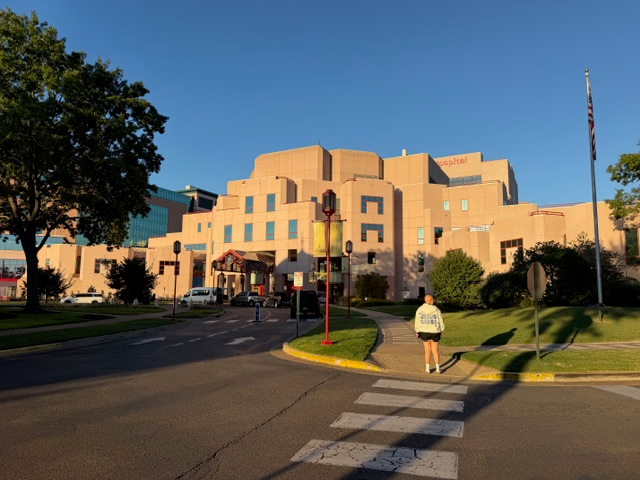
When we got to the emergency room, I pulled right up to the doors.
I left my truck door open and ran inside looking for a wheelchair.
A security guard saw me and started trying to figure out what this crazy man was doing.
I got a wheelchair and ran back out to Kinley.
When I put her in it, she couldn’t even hold her own head up.
Her head kept falling backward.
I started pushing her inside while trying to support her head.
The security guard was asking me something.
I don’t even remember what.
“I don’t know, man. I just gotta go.”
He understood the assignment.
A nurse saw us almost immediately. She grabbed the wheelchair and started pushing Kinley back while I walked beside them holding my daughter’s head up because she didn’t have the strength to do it herself.
That image has never really left me.
The “Fast Pass”
St. Jude had given us a card for situations exactly like this.
We jokingly called it the “fast pass.”
There wasn’t anything funny about why we had it.
It basically told an emergency room that Kinley was a pediatric oncology patient and couldn’t afford to sit around in a waiting room.
It also contained the information doctors needed immediately. Her medical information. Allergies. Medications she shouldn’t receive. Instructions about her port, including what needle to use.
Basically, all the information a terrified parent probably isn’t going to remember when his daughter can’t hold her own head up.
I handed them the card.
I remember almost seeing relief on their faces.
Good.
They didn’t need me to explain everything.
They just needed to help my daughter.
“I’m About to Press This Button”
They got Kinley into a room.
The ER doctor assessed her and then looked at me.
“I’m about to press this button, and it’s going to be kind of chaotic for a little while. But I just want you to be prepared.”
“Do what you gotta do.”
She pressed the button.
The room filled with people.
Doctors.
Nurses.
Support staff.
Everybody moving.
Everybody doing something.
Megan had already been working the phones, and Kinley’s regular team knew we were there. Her doctors from the St. Jude affiliate upstairs began coming down.
That helped.
These were our people.
They knew our girl.
They accessed her port, drew labs, started fluids, hooked her up to monitors and began trying to get her stabilized.
Eventually, they did.
And then we went upstairs.
The Perfect Storm
The best way I can describe what happened is that Kinley’s body had been hit by a perfect storm.
She had been through chemotherapy. She had undergone a procedure where a massive amount of fluid and material had been removed from her abdomen. Then came the aftereffects of treatment on top of all of that.
She was dehydrated.
She was anemic.
Her blood pressure was low.
Her heart rate was high.
Her counts were down.
Her body had been asked to do too much.
She needed blood.
Two units.
By this point in our journey, blood transfusions weren’t completely foreign to us anymore. But this one felt different.
Maybe because I had just spent the morning wondering if I could get her to the hospital fast enough.
They gave her the first unit.
Then the second.
And sometime during that second unit, something started changing.
I started seeing my daughter again.
Kinley started acting more like Kinley.
The girl who couldn’t hold her own head up a few hours earlier was coming back.
There really aren’t words for the relief of watching that happen.
Somebody Else’s Blood
I’ve thought a lot about that blood.
Somewhere, somebody decided to donate it.
They probably walked into a blood drive or donation center, rolled up a sleeve, sat in a chair for a little while, grabbed a snack afterward and went on with their day.
They didn’t know Kinley.
They didn’t know me.
They didn’t know that one day a dad would be sitting beside his daughter in a hospital room watching their blood drip through a tube and into her body.
They’ll probably never know what it meant to us.
But I do. I know this is a repeated theme in my journal.
Someone gave something from themselves that Kinley desperately needed and could not produce for herself at that moment.
And slowly, life came back into her.
As a Christian, it’s almost impossible for me not to see something bigger in that.
Blood is woven throughout the story of our faith.
Jesus told His disciples at the Last Supper:
“This is my blood of the covenant, which is poured out for many for the forgiveness of sins.”
Matthew 26:28
I don’t want to force some neat spiritual lesson onto one of the scariest days of my life.
That morning didn’t feel neat.
It felt terrifying.
But sitting beside Kinley while someone else’s blood flowed into her, I couldn’t escape the picture.
She needed something she couldn’t provide for herself.
And it had to be given.
That is grace.
Not because a blood transfusion and the blood of Christ are the same thing. They’re not.
But sometimes something physical happens right in front of you that helps you understand something spiritual a little differently.
Christianity says that ultimately I can’t save myself either.
I need what Christ freely gave.
His blood.
His life.
His grace.
And maybe that’s one of the strange things suffering has done to me.
Words I’ve heard in church my entire life don’t always sound the same anymore.
Sometimes I see them hanging from an IV pole beside my daughter’s hospital bed.
Help
There’s another part of this day I don’t want to miss.
I spent that morning trying desperately to help my daughter.
But the truth is, I couldn’t.
I could drive.
I could turn on my flashers.
I could shake her awake.
I could scream her name.
I could run into an emergency room.
I could hold her head up.
But I couldn’t fix what was happening inside her body.
I needed help.
And help kept showing up.
A security guard who realized something was wrong.
A nurse who grabbed the wheelchair.
An ER doctor willing to press the button.
A room full of people who came running.
Kinley’s regular doctors coming downstairs.
And somewhere in all of it, two anonymous people who had given blood without having any idea whose life it might touch.
Psalm 121 begins:
“I lift up my eyes to the mountains, where does my help come from? My help comes from the Lord, the Maker of heaven and earth.”
I believe that.
But I’m also learning that sometimes God’s help arrives wearing scrubs.
Sometimes it pushes a wheelchair.
Sometimes it answers a frantic phone call.
Sometimes it comes through a stranger who rolls up a sleeve and gives blood.
And sometimes God’s provision doesn’t mean you aren’t terrified while it’s happening.
Faith didn’t make me calm on that drive.
I was scared out of my mind.
Faith didn’t mean I knew everything was going to be okay.
I didn’t.
Sometimes faith is simply admitting:
I can’t do this. I need help.
And trusting God with what happens next.
That morning I drove to Baton Rouge wondering if I could get my daughter there fast enough.
That night, I got to watch her come back.
I don’t think I’ll ever forget either feeling.
I'm glad to hear your thoughts!