
July 9–25, 2025
By July, the hospital had started becoming part of the rhythm of our lives.
Not normal exactly.
I do not think any of this ever became normal.
But familiar.
We knew the drive.
We knew the clinic routine.
We knew the questions.
We knew that chemo days themselves were not always the worst days.
Usually, the hardest part came later.
Seven to ten days after treatment, the side effects would really show up.
July 9 was day seven.
Kinley woke up vomiting and achy.
We loaded her up with pain medicine for the trip to Baton Rouge and headed back to the St. Jude clinic.
By the time we got there, she was hurting badly.
This pain felt different.
She described a sharp pain deep inside her belly.
She had also gained some weight, which made the doctors want a closer look.
They ordered an ultrasound to make sure they were not missing anything.
Then came the blood work.
Her counts were very low.
That part was expected.
The solution had also become familiar.
A blood transfusion.
Waiting on Blood
There was a whole process to it.
We would arrive at the hospital.
They would check her vitals.
They would draw blood.
The labs would come back.
If everything looked good enough, we could go home.
If her hemoglobin, platelets, or other counts were too low, they would order blood from the blood center.
Then we waited.
Best case, it showed up in a couple of hours.
Sometimes it took much longer.
By then, we had learned there was not much point in watching the clock.
The blood came when it came.
And when it did, it usually helped.
Fresh blood had a way of giving Kinley a little bounce.
More color.
More energy.
A little more life.
I found myself thinking about how incredible that really is.
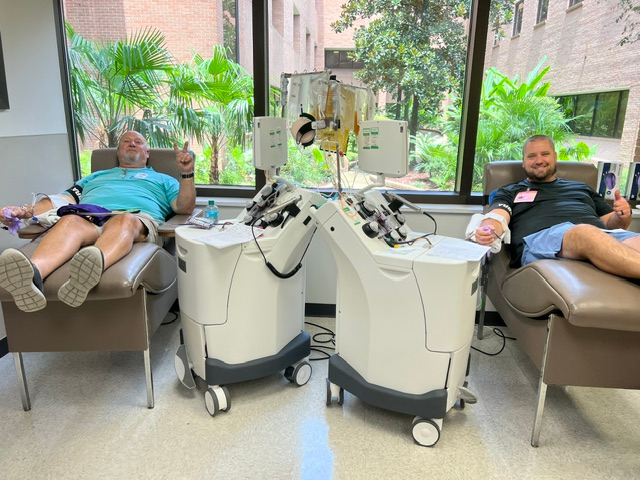
Somewhere, someone sat down, rolled up a sleeve, and gave blood.
They probably got a snack afterward.
Maybe they went back to work.
Maybe they forgot about it by the end of the day.
But that blood eventually made its way to our daughter.
They would never know her.
They would never see her face.
They would never know that Megan and I were sitting in a hospital room waiting for exactly what they had given.
They would never know the relief we felt when the bag finally showed up.
They would never know that part of them was helping keep our little girl going.
There is something powerful about that.
Blood is life.
And someone was willing to give some of theirs so Kinley could have more of hers.
Good Blood
The more transfusions Kinley received, the harder it became for me not to think about the language Scripture uses about blood.
As Christians, we talk about the blood of Jesus all the time.
Sometimes I think church language can become so familiar that we stop hearing how powerful it really is.
The blood of Christ was not a metaphor for a nice idea.
It was a life given for another.
Jesus said:
“No one has greater love than this: to lay down his life for his friends.”
I am not saying a blood donation and the cross are the same thing.
They are not.
But watching someone else’s blood slowly enter my daughter’s body gave that imagery a weight I had never felt before.
A stranger had given something from his or her own body.
Kinley had done nothing to earn it.
She did not know the donor.
She could not repay the donor.
She simply received what had been freely given.
And it gave her strength.
That hit me.
Because that is the heart of grace.
We receive life we could never create for ourselves.
Christ gave what we could not provide.
His life for ours.
His blood for our salvation.
And now, in a hospital room, strangers were giving blood that helped Kinley’s body recover enough to keep fighting.
Different gifts.
Different purposes.
But both reminded me of the same truth.
Life is a gift.
And sometimes it comes because somebody else was willing to give.
Someone Who Just Sat There
A week later, we were back for round four.
Megan and Kinley had gone up the day before to get checked in, have blood work done, and start fluids so her body could get ready for chemotherapy.
The doctors never expected Kinley’s numbers to be perfect.
That was not necessarily the goal, but it was a pleasant surprise.
They knew chemotherapy would knock them down.
The question was always how far.
How long would it take her body to recover?
Could they keep treatment moving?
Every body reacts differently.
Every round teaches the doctors something new.
That is why they checked everything constantly.
That is why they stayed ready to pivot.
That morning, before Cohen and I left for Baton Rouge, I met one of my pastors and mentors at a coffee shop.
It was one of the better conversations I had during that season.
Not because he gave me the perfect verse.
Not because he solved anything.
He did not try.
He asked questions.
He listened.
He offered support.
He was just there.
I needed that.
Oddly enough, I felt lonely.
But some of that was my own doing.
I did not feel like talking to people.
I barely had the energy for the conversations I needed to have.
Most of what I had went toward Kinley.
Whatever was left had to keep the rest of life moving.
Work.
Cohen.
Home.
Marriage.
Bills.
Normal responsibilities that somehow did not get the memo that our life had blown apart.
I was drained.
Sometimes the best thing somebody can do for a hurting person is resist the urge to fix them.
Just sit there.
Listen.
Be there.
That morning, that was enough.
Treatment went smoothly, and before long, we were able to go home again.
Wait… Normal?
Then came July 25.
It was Megan’s turn to take Kinley to clinic.
That morning, we received a notification saying they had already scheduled a blood transfusion.
No surprise there.
That had become the routine.
Low counts.
Order blood.
Wait.
Transfuse.
Go home.
So they drew Kinley’s blood and sent it off.
A little while later, the results came back.
Her counts were…
Normal?
Normal.
That word had become strange.
We almost did not trust it.
Then they checked her weight.
She had lost about 5 kilograms, roughly 11 pounds, since Tuesday when we checked out of the hospital.
Normally, that would not exactly be something to celebrate.
But the night before, it had just been Kinley and me for dinner.
She asked for pizza.
Then my girl ate three slices.
Three.
A couple of weeks earlier, she could barely eat anything.
She could not keep food down.
We were feeding her through TPN.
Now she was eating pizza.
Three slices.
When I say tears of joy, I mean a river.
Sometimes joy is complicated.
Sometimes it looks like crying over pizza.
A Short Appointment
Because her counts looked good, the all-day clinic appointment got cut down to just a couple of hours.
That alone felt like winning the lottery.
On the way home, Megan and Kinley decided they should celebrate.
They picked up one of Kinley’s friends and went to the arcade.
A normal kid thing.
After months of hospitals, pumps, blood counts, vomiting, and doctors, she got to go play games with a friend.
That mattered.
A lot.
Today Was a Good Day
That season taught me how quickly the definition of a good day can change.
A good day used to mean things went according to plan.
Business was good.
Dinner was good.
Everybody was healthy.
Nothing broke.
Now?
A good day could mean her counts were normal.
A good day could mean no transfusion.
A good day could mean three slices of pizza.
A good day could mean an appointment ended early.
A good day could mean an arcade with a friend.
And sometimes a good day started with something someone else gave.
A stranger’s blood.
A pastor’s time.
A doctor’s attention.
A friend’s presence.
Grace has a way of arriving through people.
Sometimes through a conversation.
Sometimes through a bag hanging from an IV pole.
I still think about the people who donated blood during that season.
Most of them will never know what they did for us.
They will never know Kinley.
They will never know the relief in our faces when that blood arrived.
They will never know that their generosity helped our daughter stand back up and keep fighting.
But we know.
And it reminded me of Jesus.
Life given for someone else.
Grace received, not earned.
Strength we did not have on our own.
By July 25, for once, we did not need a transfusion.
Kinley ate pizza.
She went to the arcade.
Her blood counts were normal.
And after weeks of learning how to survive one hard day at a time, we finally got to say something simple.
Today was a good day.
One More Thing That Made Us Smile
Twice a week, the hospital would bring service and support animals around to visit the patients.
Dogs were always a hit.
But one day they brought a miniature horse.
A miniature horse.
Into the hospital.
We got a huge kick out of it.
By that point, not much surprised us anymore, but seeing a tiny horse walking the hospital halls was definitely up there.
Those visits were another reminder that the care team understood healing was not only about medicine.
Sometimes a kid needed a distraction.
Sometimes a family needed to laugh.
Sometimes apparently you needed a horse.
And honestly, it worked.


