
Lamenting
Wednesday, January 28th, we walked into the hospital—and for the first time in a long time, it felt strange.
Not scary.
Not overwhelming.
Just… unfamiliar.
There was a quiet thought that hit all of us at once: We don’t really belong here anymore. And as strange as that sounds, it was a beautiful realization. After nearly ten months of treatments, appointments, fasting, scans, and IVs, the hospital no longer felt like home—and we were grateful for that.
This day was about post-chemo scans. Blood work. CT scans.
The kind of appointment where you walk in carrying one word in your heart:
Cancer-free.
That was the prayer.
That was the hope.
The morning started with scans and labs. Ironically, after months of Kinley being told she couldn’t eat before procedures, Megan woke up that morning and made her a big breakfast—only to realize Kinley was supposed to arrive fasted.
We missed that one.
Thankfully, the team worked around it, and it became one of those moments where you laugh because the alternative is letting fear take the lead.

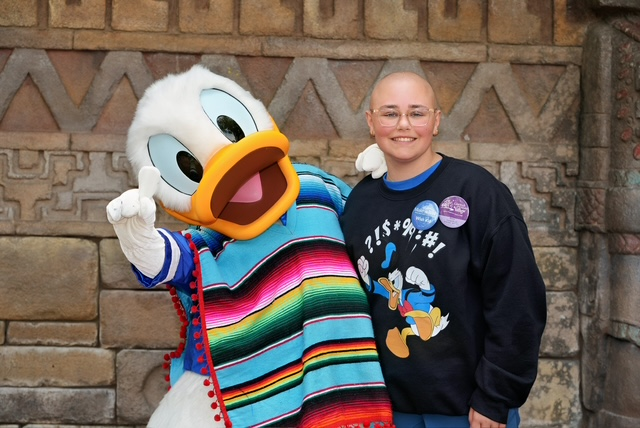
After the scans, something unexpected happened. The clinic was hosting a Lego Day, and through the Dream Day Foundation, Kinley got to sit and build—laughing, creating, just being a kid.
It felt like a small gift of grace in the middle of a heavy day.
We also ran into nurses and hospital staff we’ve come to know deeply over the last ten months—people who’ve seen us at our weakest. People who prayed with us, encouraged us, and carried us through days that felt impossible.
Then we were called back to see the doctor.
He walked us through the results carefully.
The words cancer-free didn’t come.
But neither did the worst-case scenario.
There were still active tumors.
The good news? They hadn’t spread. Nothing had moved to her lungs or liver. The chemo had done what it was meant to do—it had shrunk the tumors. There was less cancer than before.
But the fight wasn’t finished.
The doctor explained that Kinley’s case would be presented to the tumor board at St. Jude Children’s Research Hospital—a group of some of the most respected doctors in the world. They would review everything together and determine the next steps.
We’d have answers.
Just not yet.
And that waiting—the not knowing—is the hardest part.
If there’s a battle to fight, we’re ready. We’ll suit up. We’ll move forward.
But sitting still, knowing something is there and not knowing what comes next—that’s brutal.
The Bible doesn’t rush past seasons like this. It gives us language for them. David—called a man after God’s own heart—wrote words that sound painfully familiar in moments like these. Psalm 13 is a prayer of lament. Not polished. Not resolved. Just honest.
Psalm 13
How long, O Lord? Will you forget me forever?
How long will you hide your face from me?How long must I take counsel in my soul
and have sorrow in my heart all the day?
How long shall my enemy be exalted over me?Consider and answer me, O Lord my God;
light up my eyes, lest I sleep the sleep of death,lest my enemy say, “I have prevailed over him,”
lest my foes rejoice because I am shaken.But I have trusted in your steadfast love;
my heart shall rejoice in your salvation.I will sing to the Lord,
because he has dealt bountifully with me.
David doesn’t wait for the answer before he trusts. He doesn’t wait for circumstances to change before he sings. He chooses trust while the “how long” still hangs in the air.
That’s where we are—still asking questions, still waiting, still trusting.
The week before these scans, our church held a night of prayer. At The Bayou Church, they call it Pray First. Our church family prayed specifically for Kinley—for healing, for wisdom for her doctors, and for strength for Megan and me. For our marriage. Our endurance. Our faith.
Then we learned other churches in our community were holding prayer nights too.
In Scripture, lament is rarely done alone. When one part of the body hurts, the whole body carries it. That’s what this season has felt like—our church, our community, lifting our daughter’s name together, praying the words we don’t always have the strength to say.
It’s overwhelming—in the best way—to feel that kind of love. To know so many people are lifting our daughter’s name to heaven. To be reminded that when our faith feels tired, the Body of Christ steps in and carries the weight.
So now we wait.
We wait for the tumor board.
We wait for answers.
We wait the way Scripture teaches us to wait—honest, prayerful, and anchored in God’s steadfast love.
This chapter isn’t finished yet.
But we are still in His hands.
And until the answer comes, we will keep trusting, keep praying, and keep showing up—believing that the same God who has carried us this far will continue to be faithful.
Lament is what faith looks like when the miracle hasn’t come yet.